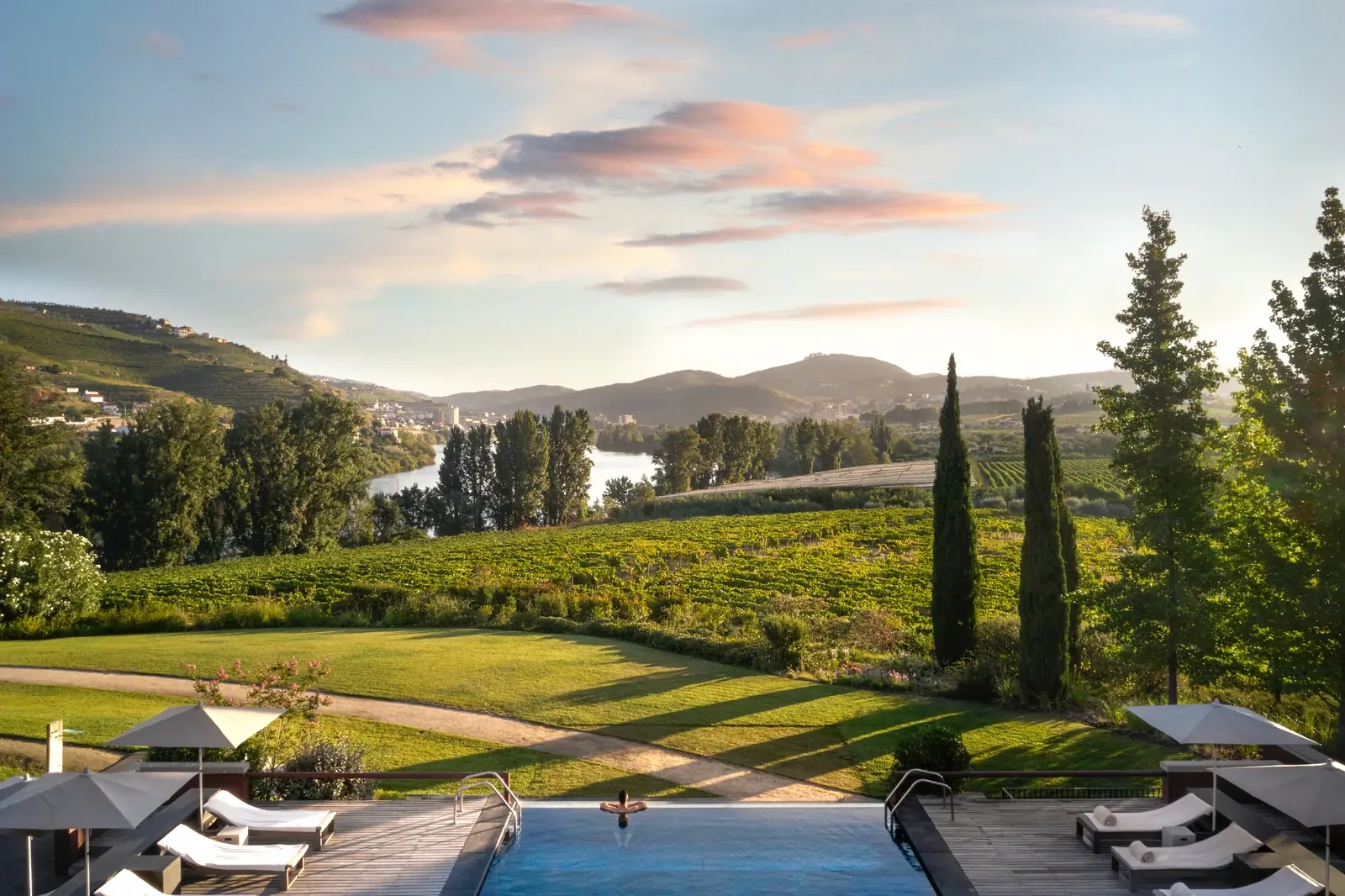

What does a three-day corporate retreat in the Douro Valley look like?
The group lands in Porto, climbs into the valley and takes a quinta as its base, and wine structures the days. Nothing in the valley can be improvised on the day. Catering, technical kit and crew all travel up from Porto on a planned chain, so the build starts days before the group arrives. BTQ Events runs the itinerary below for a leadership group of 30 to 60.
Day one: Porto arrival and the climb
Flights land at Porto Airport. The city can hold the arrival briefing and a first hosted dinner. Otherwise the coaches leave at once on staggered, hosted departures and reach the quinta core 1 hour 40 later. Arrival drinks run on the terrace at golden hour, and dinner on the first night stays light.
Day two: the working session and the wine programme
The senior tier starts with the spa circuit or a walk. The working session runs in the Wine Library after lunch. The wine programme follows, with a blending task, a vineyard walk and terrace tastings as the light drops. A blending masterclass takes 12 to 18 people, so a larger group rotates. Dinner is a wine-paired tasting menu.
Day three: the land and the long table
An Earth Lab walk through the organic garden leads into the closing workshop. The final evening sits at one long table above the river bend at Pinhão. Coaches leave for Porto the next morning, and the principal travels by private vehicle or helicopter, with a coach held back as weather contingency.
The itinerary above is built on Six Senses Douro Valley, a 19th-century quinta with 71 accommodations across the manor and the Vineyard buildings on an 8-hectare estate. A full buyout supports 80 to 140 delegates depending on sharing. The September and October harvest is the strongest window. Lead time runs 14 to 18 weeks, with the full 18 for a buyout or a helicopter plan.
What does a three-day corporate retreat in the Alentejo look like?
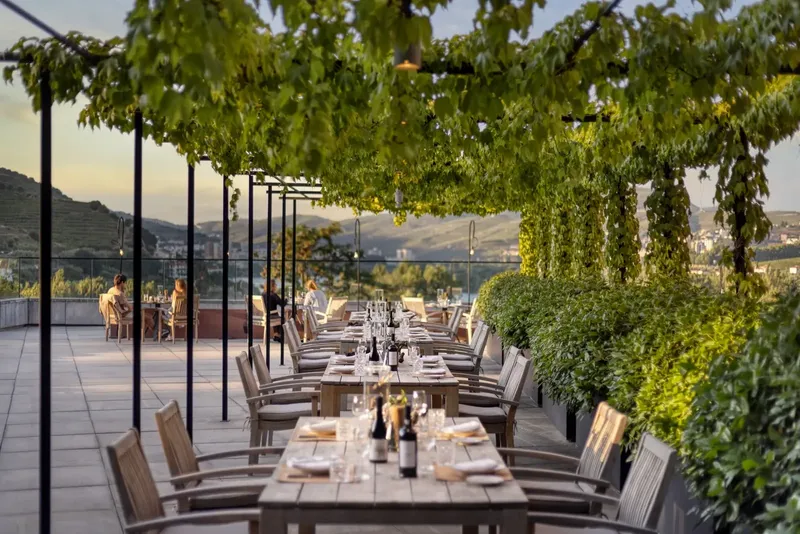
An Alentejo retreat is built around distance and daylight. The group leaves Lisbon mid-morning, reaches the estate by lunch and opens the first working session that afternoon, so the 1 hour 30 transfer counts as programme time. Once inside, the estate sets the rhythm, with farm rooms for the sessions, the courtyard for the gaps between them and the land for the late programme.
Day one: Lisbon to Monsaraz and the first session
Coaches leave Lisbon Airport mid-morning for Monsaraz, about 1 hour 30. Buyout terms come first: rooms are assigned, the service structure is aligned and the estate is held private before the first working session opens in the converted farm rooms. Dinner on the first night is light, in the main restaurant.
Day two: farm, spa, cellar and the olive mill
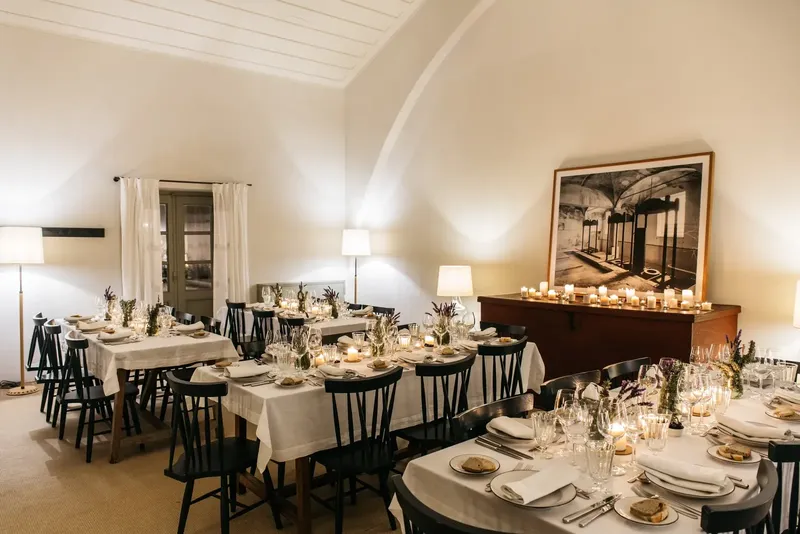
The day starts with a working-farm walk before breakfast and a morning working session, followed by a 90-minute spa rotation for the whole group. The afternoon is a tasting at the estate winery, with 12 to 16 for a masterclass booked four weeks ahead. Dinner is candle-lit in the Old Olive Mill, which seats 70 and is the estate's only formally seated event space at scale. A dark-sky close follows.
Day three: the garden lunch and the return
A final session runs in the morning, with lunch by the organic garden at the Hortelão, open from May to September. The group closes with a long-table dinner and returns to Lisbon the next morning. Before the drive, the principal tier can take a sunrise balloon over the Alqueva lake, four to a balloon.
São Lourenço do Barrocal is 780 hectares near Monsaraz, a working farm in one family for about 200 years, with around 40 keys. The strongest formats run 30 to 80 guests across two to four nights, and a full buyout tops out at 80. Above that, guests feel processed rather than hosted. April to June and September to October are the dependable windows, and many retreats avoid the midsummer heat.
Douro, Alentejo or Cascais: which region fits the brief?
BTQ Events chooses the region before the venue, because the region sets the transfer, the season and the kind of evening the programme can hold. One question decides it: is the brief about wine, about privacy, or about staying close to Lisbon? The table puts the three answers side by side.
| Douro Valley | Alentejo | Cascais | |
|---|---|---|---|
| Access | 1 hour 40 from Porto Airport | 1 hour 30 from Lisbon Airport | 30 minutes from Lisbon Airport |
| Retreat style | Wine country, estate rhythm, incentive layer | Working estates, dark sky, single-estate buyout | Coastal base, board offsites, executive retreat |
| Natural length | Three nights | Two to four nights | Two or three days |
| Anchor inventory | Six Senses, 71 accommodations; working quintas | Barrocal, about 40 keys; estates of 19 to 23 rooms | The Oitavos 142 rooms; Penha Longa 194 rooms |
| Buyout ceiling | 80 to 140 delegates | Up to 80 delegates | One base hotel; the strength is the spread of venues around it |
| Season | September and October tighten first | April to June and September to October | Indoor all year; coast April to October |
| Supplier base | Chains, generators and service travel up the valley with the guests | Open country with a thinner supplier base than the coast | Lisbon's supplier base 30 minutes away |
| Pairs with | Porto first; Vidago Palace to the north | Lisbon first; Comporta an hour from Lisbon | Sintra 20 minutes; Lisbon 30 |
Regions can also be chained. A two-region wine brief runs Alentejo and Douro as contrasting legs. A Cascais base with a palace dinner in Sintra works when Lisbon access stays important. North of the Douro sits Vidago Palace, a 1910 Belle Époque hotel on a 110-hectare park near Chaves. BTQ Events has produced three-night executive offsites there during which the group never left the grounds.
What does a corporate retreat cost in Portugal?
Expect between €250 and €900 per person per day for a corporate retreat in Portugal, according to BTQ Events production data, 2026. Treat the figure as a guide rather than a fixed rate, since season, accommodation category and programme all move it. A full estate buyout for 40 or more guests over two nights starts from about €30,000.
Forty guests for three days cost €30,000 at the low end and €108,000 at the high end, so a quote is easy to check. The hotel category moves that figure first, from a working quinta to a five-star estate. Season comes second, since February costs less than the vindima harvest, and the number of hosted evenings comes third.
What moves a retreat budget, heaviest first
- Accommodation category
A buyout of a Relais & Châteaux estate and a block of rooms at a working quinta are the same number of beds at very different prices.
- Season
The Douro in harvest and the Alentejo in spring are the strongest programmes and the tightest calendars. February costs less and shows a different landscape.
- Programme density
Two hosted evenings, a spa rotation and a masterclass cost more than one dinner and a walk, because each one adds suppliers as well as hours.
- Transfers
Staggered coaches, a late arrival or a helicopter for the principal change the transport line.
In what order does BTQ Events build a retreat programme?
A BTQ Events retreat has five phases, which are arrival and transfer, working sessions, the activity layer, hosted evenings and departure. A two-day retreat runs one cycle of all five. A three-day retreat, like both itineraries above, fits a full working session on day two, with activity and a hosted evening after it. A five-day retreat repeats the working and activity layers and carries a stronger incentive register. Lead time is 14 to 16 weeks.
The business goal is decided first, then the region, then the base property, and only after that does the day-by-day rhythm get written. BTQ Events, operating in Portugal since 2022, sends a structured proposal within 48 hours of a brief, whether it is for the Douro, the Alentejo or the coast.
Define the business goal
Decide whether the retreat is for strategy, alignment or recognition. That goal settles whether the programme is built around a facilitated agenda or around the destination.
Choose the region before the venue
Pick the Douro for wine and estate rhythm. The Alentejo suits privacy and a single-estate buyout, while Cascais gives Lisbon access and a coastal base.
Confirm the base property
Check rooms, meeting space, dining, evening format, supplier access, transfer logic and buyout requirements. For 40 guests over two nights, expect a buyout from about €30,000.
Set the rhythm across two to five days
Give day two to the main working session, then the activity, then the hosted evening. Hold the return for the morning after the closing dinner.
Lock the suppliers early
Wine masterclasses take 12 to 18 people at Six Senses and 12 to 16 at Barrocal, where they book four weeks out and menus lock six weeks before. In the Douro, every supplier travels up the valley on a planned chain.
Direct it on site
One producer holds the schedule from the first coach to the last. BTQ Events staffs this role on every retreat it produces.
“At Barrocal, the schedule follows the Alentejo day. Morning for focus, afternoon for shade, dinner after the heat releases.”
Frequently asked questions
How much does a corporate retreat in Portugal cost?
It costs €250 to €900 per person per day in BTQ Events production data, 2026, depending on season, accommodation category and programme. A group of 40 staying three days therefore spends about €30,000 to €108,000. An estate buyout starts from about €30,000 for 40 or more guests over two nights.
How long should a corporate retreat be?
Three days leaves day two free for a full working session, followed by an activity and a hosted evening. Two days runs one cycle of all five phases with tighter timing. In the Douro, three nights is the natural length because the 1 hour 40 transfer outweighs a shorter stay. BTQ Events builds two- to five-day programmes.
Douro Valley or Alentejo for a company retreat?
Choose the Douro when the brief is about wine and an active estate programme; its quinta base sits 1 hour 40 from Porto, with 71 accommodations at the anchor property. The Alentejo fits a brief about privacy, working land and a single-estate buyout, 1 hour 30 from Lisbon with a ceiling of 80 delegates. BTQ Events produces both.
When should a corporate retreat in Portugal take place?
In the Douro, the September and October harvest gives BTQ Events its strongest programmes; in the Alentejo, April to June and September to October do. Cascais works indoors all year and on the coast from April to October. Many Alentejo retreats avoid the July and August heat.
How many people can a retreat in the Douro or the Alentejo take?
BTQ Events runs retreats for 20 to 100 people. A Six Senses Douro Valley buyout supports 80 to 140 delegates depending on sharing. São Lourenço do Barrocal runs best at 30 to 80 and stops at 80 for a full buyout. Above those ceilings the group splits across properties or moves to a resort.
What is the difference between a retreat and an offsite?
An offsite can be a short working session away from the office. A retreat is a fuller stay of two to five days with one base property and a stronger destination role, combining working sessions, accommodation, hosted meals and activity. BTQ Events produces the retreat as one programme, with transfers and evenings inside the scope.
What does a corporate retreat planner in Portugal do?
A planner chooses the region and the property, then builds the days around them. BTQ Events goes further and produces the stay: working sessions, meals, activity, hosted evenings, transfers and direction on site, for 20 to 100 guests across 2 to 5 days.
Who runs the retreat on site?
A single BTQ Events producer owns the on-site schedule from arrival to departure, and the same team manages the supplier relationships. Within 48 hours of the brief, the proposal names the venue, the programme, the suppliers, the timing and the exclusions.
Sources
- BTQ Events production data, Retreat cost ranges, buyout thresholds and programme lead times, Portugal (2026)