Heritage ceremonial anchor
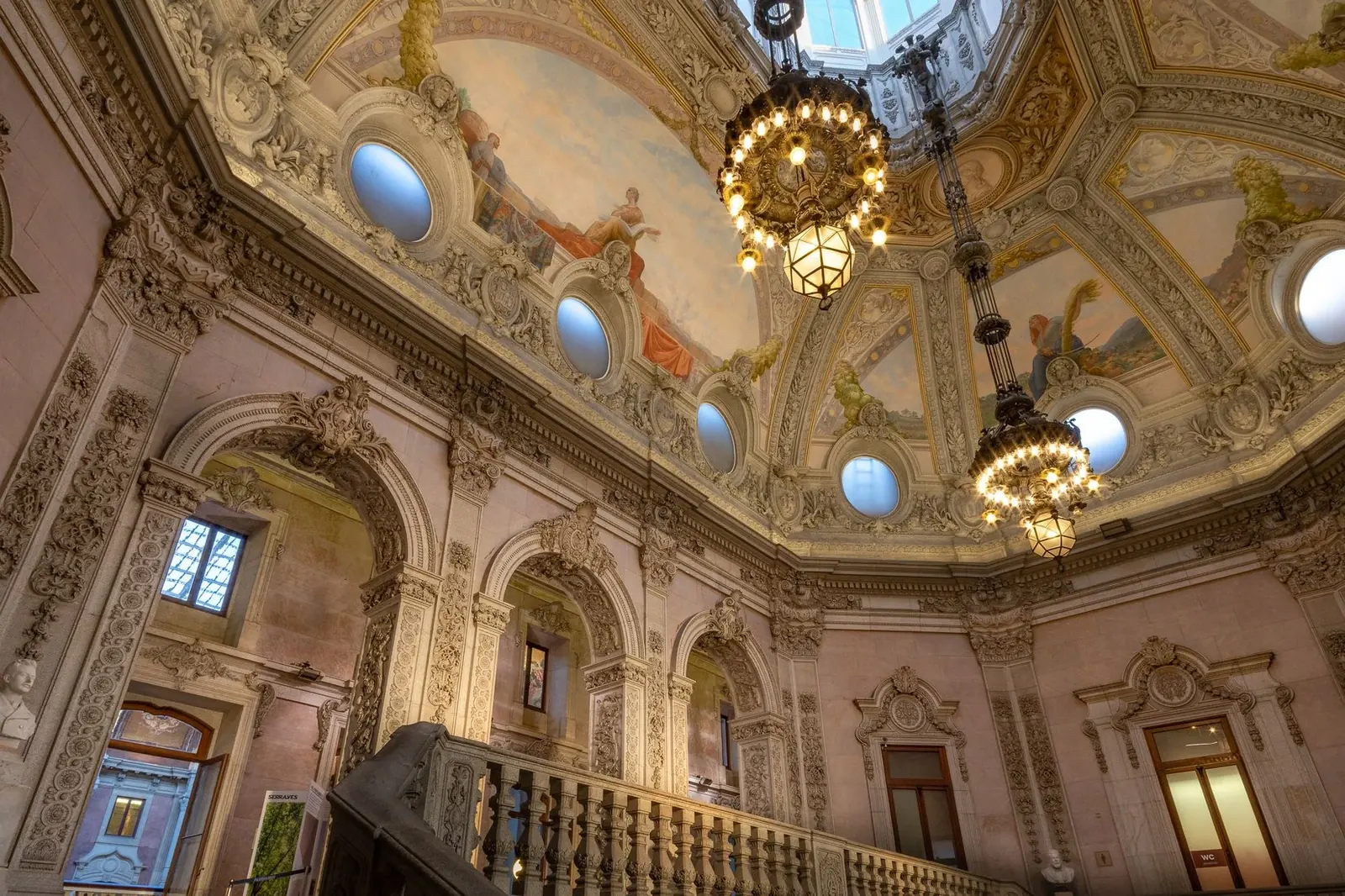
A 19th-century Neoclassical palace in Porto's UNESCO-listed historic centre, built between 1842 and 1910 and still operated by the Associação Comercial do Porto. Eight distinct rooms, covering Pátio das Nações, Salão Árabe, Sala Dourada, Sala Tribunal, and four more, sit under one heritage roof.
Palácio da Bolsa is a 19th-century Neoclassical historic place in Porto, Portugal, governed by the Associação Comercial do Porto (ACP) and inscribed inside the UNESCO Historic Centre of Porto since 1996. Built on the site of the former burned-down São Francisco convent following the 1832 fire that destroyed the cloister, construction began in 1842 and continued across some seventy years. Today the Palácio stands as a National Monument of Portugal.
The building hosts concerts, receptions, congresses, incentives, modelling shows, commercial productions, and auctions across eight distinct architectural rooms, including the octagonal Pátio das Nações (capacity 500), the Moorish-revival Salão Árabe, the gold-leaf Sala Dourada, and the Sala Tribunal. It is not a hotel. Production runs under ACP heritage protocol with approved suppliers only, technical compliance filed before load-in, and a defined operating envelope that BTQ treats as the production foundation.
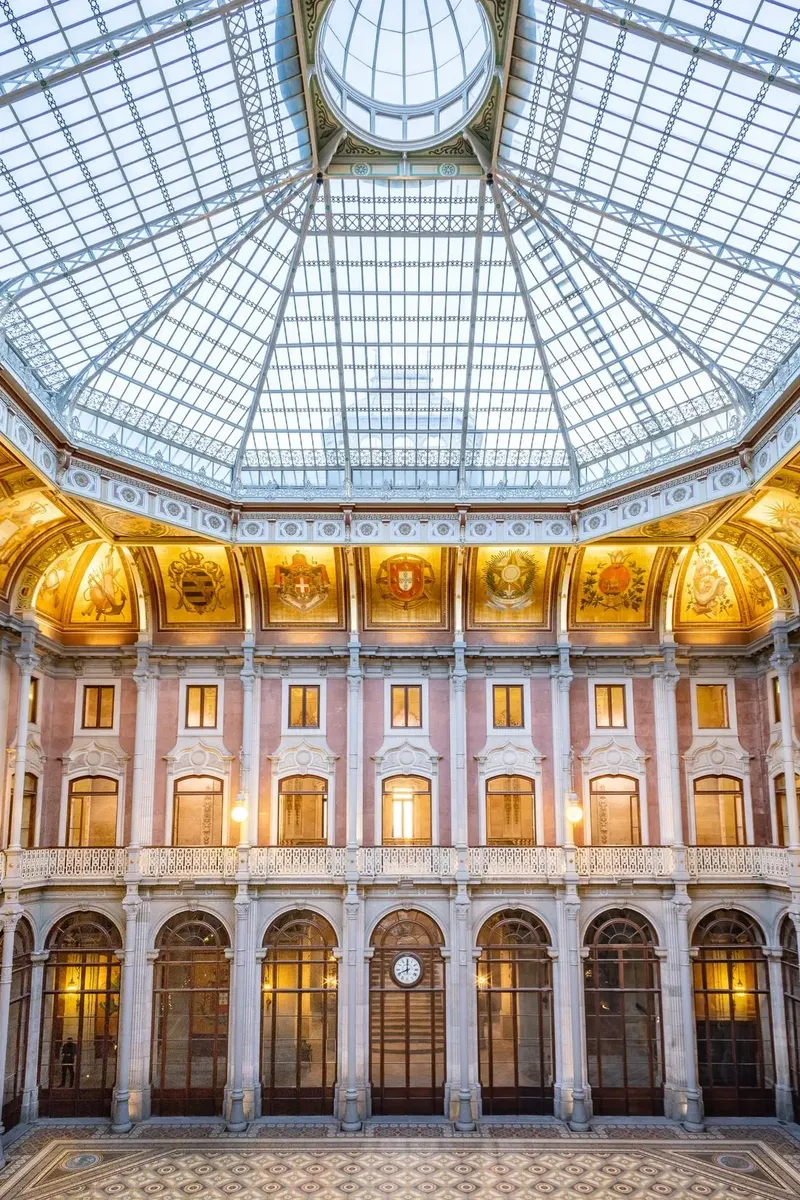
Few Portuguese venues compress this much architectural variety into one address. The Salão Árabe carries Moorish revival — gilded Arabic verses carved by Gonçalves e Sousa between 1862 and 1880. The Pátio das Nações holds 22 national coats of arms under an octagonal glass roof. Sala Dourada reads gold-leaf neoclassical; Sala Tribunal holds judicial gravitas. The combination matters for procurement leads planning a programme that needs more than one register inside a single evening — arrival, dinner, reveal moment, awards.
At Palácio da Bolsa, room choice defines the rhythm of the evening. Pátio das Nações carries the larger formats — 250–400-guest galas, awards evenings and receptions where scale matters from the first arrival. Salão Árabe is stronger as a controlled reveal than as the default room for every brief: a VIP moment, short speech sequence or 60–100-guest seated dinner. Sala Dourada gives board-level dinners and executive hosting a quieter opening before the programme moves into the building's larger register.
For corporate galas above 200 guests with a strong sense-of-place brief and no requirement for on-site accommodation, Palácio da Bolsa is the most architecturally distinct ceremonial address in northern Portugal — the heritage anchor for corporate events in Porto. For programmes built around extended brand storytelling — multi-day, hands-on activations — BTQ routes briefs to a flexible blank-space property. For multi-day pacing with vineyard hospitality on day two, the brief extends into the Douro Valley one hour east, rather than overloading the Bolsa programme.
| Criterion | Palácio da Bolsa (heritage anchor) | Convento do Beato | Palácio do Freixo | Casa da Música |
|---|---|---|---|---|
| Heritage register | UNESCO Historic Centre, 19th-c. Neoclassical + eclectic interiors | 16th-c. former convent | 18th-c. baroque palace, now Pousada hotel | Modern (Rem Koolhaas, 2005) |
| Max event capacity | 500 (Pátio das Nações cocktail) | 400 | 200 | 600 |
| On-site rooms | None | None | 88 | None |
| Distance from Porto airport (OPO) | 12 min | n/a (3h drive) | 18 min | 10 min |
| Best for | Ceremonial galas, brand launches, milestone celebrations | Lisbon-anchored ceremonial events | Multi-day programmes with on-site accommodation | Modern/architectural events, large-scale concerts |
| BTQ production volume here | High | Medium (Lisbon brief) | Medium | Low |
"At Palácio da Bolsa, the room sequence is the production decision. Pátio das Nações gives scale, Salão Árabe gives the reveal, Sala Dourada gives the executive pause."
Palácio da Bolsa houses eight distinct rooms across two floors. BTQ leads with four for most corporate programmes, while the others serve as supporting transitions, photo anchors, or VIP holds.
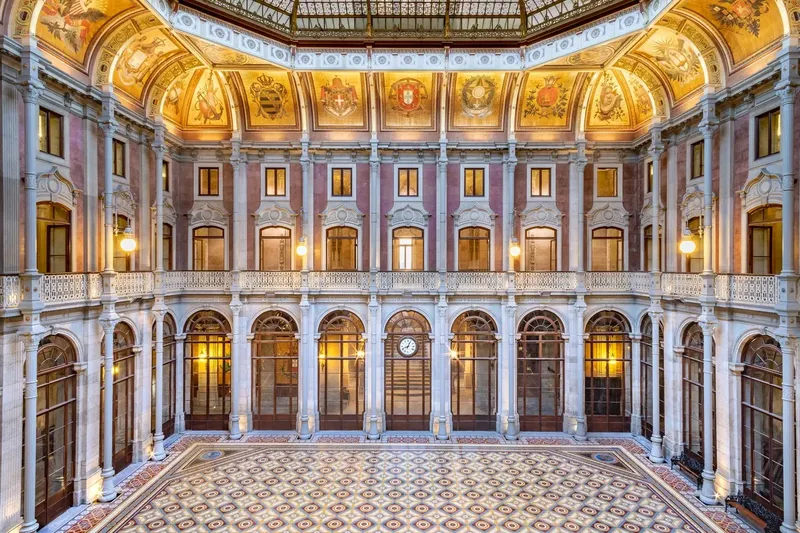
Primary anchor for 250–400-guest corporate galas, awards evenings, cocktail receptions where the scale of the building needs to register at the door.
Note —Guest flow must be designed from the entrance sequence, not the table plan. The octagonal geometry rewards radial seating, not parallel banquet rows.
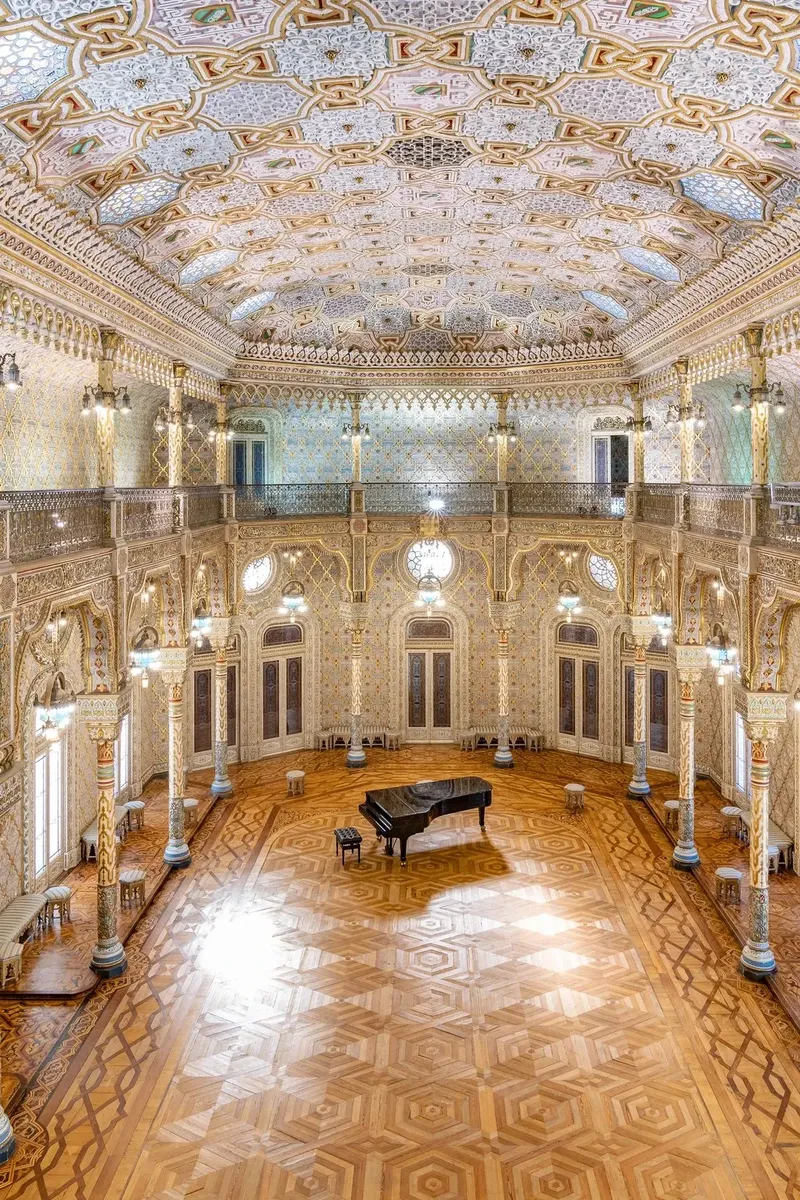
Selective use of the room works best as a controlled reveal moment within a larger evening, reserved for a VIP segment, short speeches, or an intimate seated dinner of 60–100 guests.
Note —The carved Arabic verses absorb sound differently from any other heritage room in Portugal. Lighting must be low-level dimmable warm sources only.
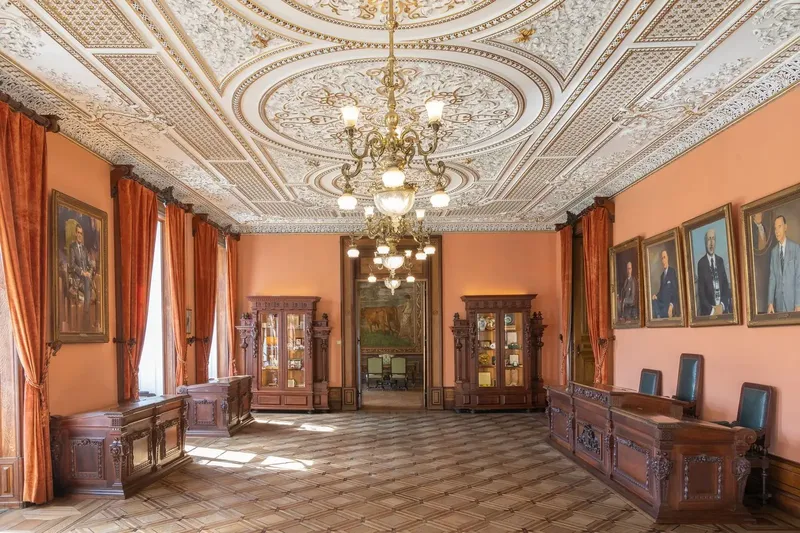
Board-level hospitality, hosted dinners, quieter pre-dinner moment before the programme moves into Pátio.
Note —Not built for amplified speeches. Wireless lavalier only.
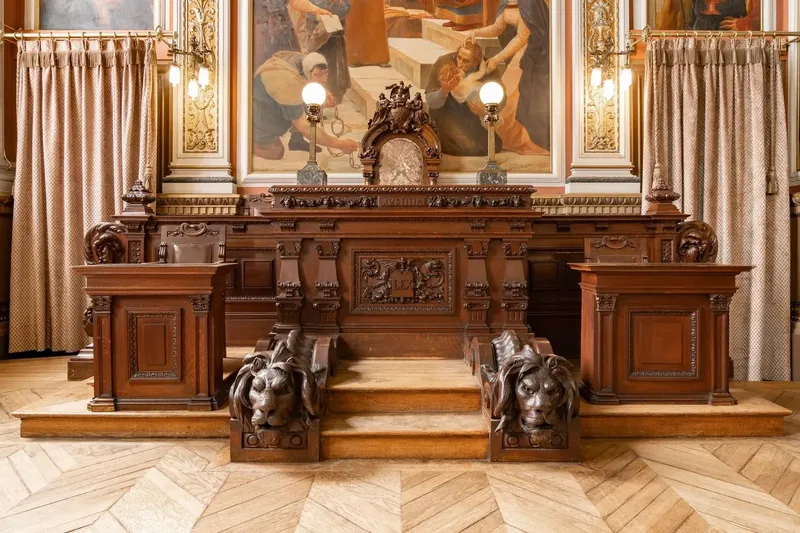
Award ceremonies, panel formats, ceremonial moments where judicial gravitas suits the brief.
Note —Original tribunal furniture is heritage-protected, so production uses freestanding staging only, with no fixings into the bench.
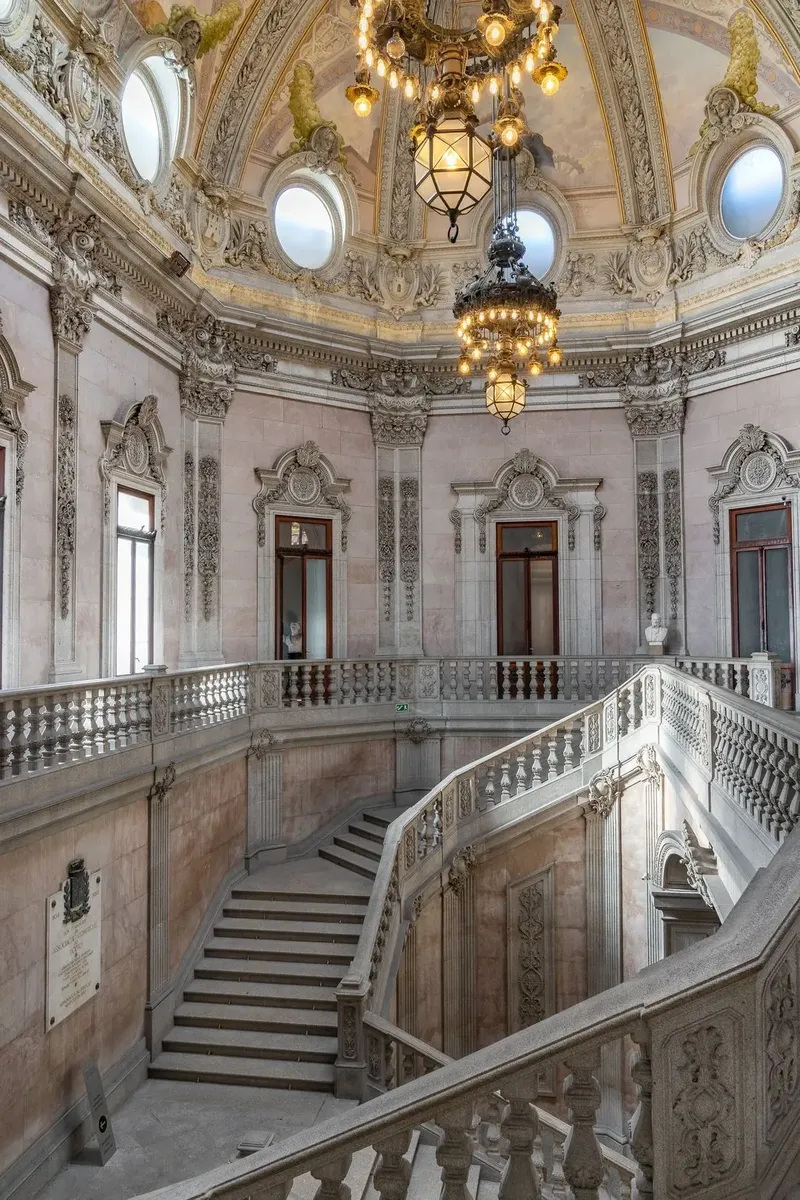
The staircase functions as the guest arrival anchor, providing the moment at which guests register the architecture before service begins and serving as the press and photography moment.
Note —Not a holding space. Cocktail service at the staircase blocks the arrival sequence.
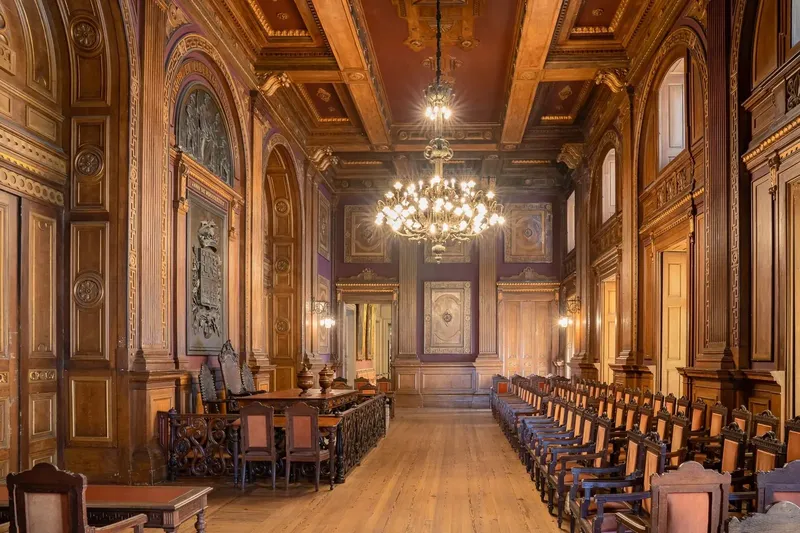
Registration and breakout sessions alongside a main programme in Pátio das Nações.
Note —Heritage assembly furniture protected — minimal decor, freestanding only.
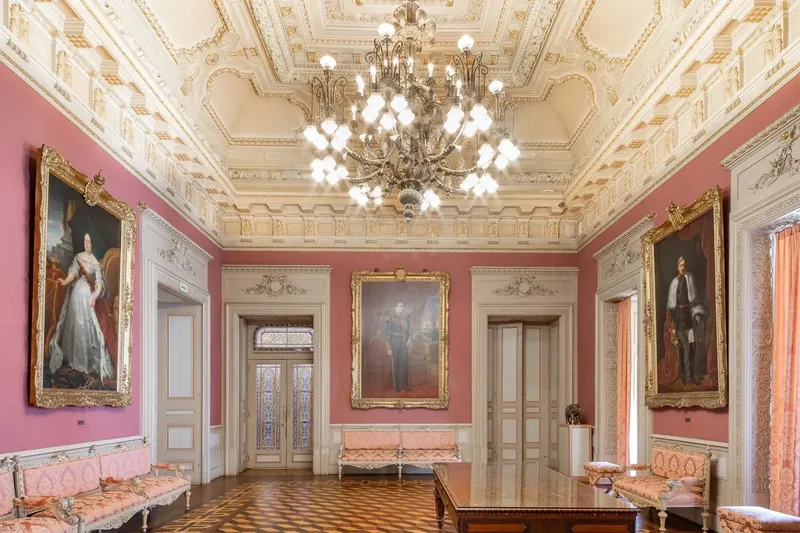
VIP hold, exhibition space for a brand activation alongside a main programme in Pátio das Nações.
Note —Heritage portraits protected — no installation contact, no flame.
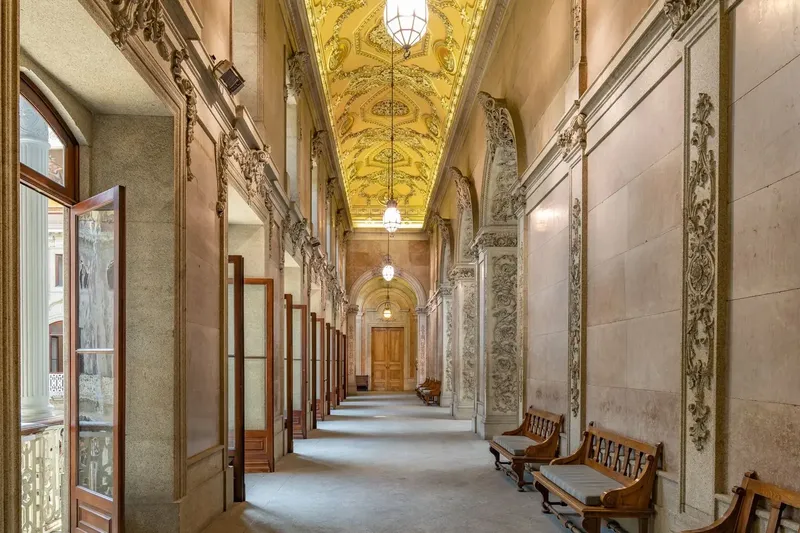
Atmospheric breakout, quieter networking, photography backdrop.
Note —Floor protection mandatory under any heavier installation.
Palácio da Bolsa operates under ACP heritage protocol that predates every Portuguese hotel BTQ uses. Producers who treat it as a hotel ballroom find out quickly that the rules are different, and programmes that respect the protocol work while programmes that fight it bend the venue out of shape.
The Associação Comercial do Porto governs Palácio da Bolsa under a protocol that predates every Portuguese hotel BTQ uses. The body has run the building since construction began in 1842, and corporate event access runs through their dedicated events team rather than through a hospitality concierge.
The first common pattern is under-estimating lead time. An eight-week brief from procurement falls short when the protocol actually needs fourteen weeks, because the ACP committee review, supplier registration, and heritage compliance brief cannot be compressed.
For large-format corporate galas at Palácio da Bolsa, BTQ recommends placing the main dinner, speeches and awards sequence in Pátio das Nações. The room carries scale from the first arrival and gives the programme a clear ceremonial centre.
Within 48 hours, BTQ confirms whether Palácio da Bolsa is the right venue or redirects the programme if scale, accommodation, or format require a different setting, such as Penha Longa Resort, Vidago, or a Lisbon address.
Venue request, programme, supplier list, technical brief, insurance, and risk assessment are all submitted to the Associação Comercial do Porto events team. This step is often underestimated, so BTQ plans for it from the start.
Room-by-room constraints are confirmed, covering freestanding production only, controlled lighting, no invasive installations, and defined sound limits inside Salão Árabe.
Approved suppliers are confirmed, AV equipment is adapted to the building's heritage doorways and protected surfaces, and access windows are aligned with ACP and security teams.
Guest flow, timing, contingency, and departure protocol are locked with the venue duty manager. At Bolsa, schedules are confirmed in advance rather than adjusted during the event.
Execution runs within the approved ACP protocol time window. Breakdown begins immediately after guest departure unless extended access has been pre-approved.
BTQ submits a protocol report to ACP confirming supplier reconciliation, heritage compliance, and media usage, maintaining the relationship for future access.
Palácio da Bolsa venue hire cost is scoped in the structured proposal BTQ delivers within 48 hours of receiving the brief. For Palácio da Bolsa, the proposal includes ACP heritage protocol filing, room assignment across the eight architectural chambers, Salão Árabe private hire rates, approved-supplier coordination, and a programme rhythm built around the state-managed event window. Typical formats include UNESCO heritage award ceremonies, diplomatic-grade brand launches, Porto historic-centre press receptions and Salão Árabe private patron evenings.
The word "gala" comes from Old French gale, meaning rejoicing or festive show, itself rooted in older Germanic and Romance terms for ceremony and public celebration. A gala dinner is therefore a formal evening built around ceremony, recognition, or institutional milestone, distinct from a standard banquet by its dress code, programmed rhythm covering arrival, speeches, awards or reveal moments, seated dining and after-dinner programming, and venue register. At Palácio da Bolsa, the ACP heritage building lends gala dinners a 19th-century Neoclassical ceremonial weight, with Pátio das Nações serving as the principal seated centre, Salão Árabe held back as the architectural reveal, and Sala Dourada reserved for the smaller ceremonial cohort. BTQ produces corporate gala dinners in this register, covering awards evenings, partner-network galas, and institutional anniversaries under ACP heritage protocol.
Palácio da Bolsa hosts concerts, receptions, congresses, incentives, modelling shows, commercial productions, and auctions across the eight historical chambers. BTQ Events produces within all of these formats, from corporate galas in Pátio das Nações (octagonal glass-domed hall, capacity 500 cocktail / 350 seated) and ceremonial dinners in Sala Dourada (gold-leaf neoclassical, 80 seated) to brand launches and reveal moments in Salão Árabe (Moorish-revival) and judicial-register banquets in Sala Tribunal. Each room operates under ACP heritage protocol, with the programme description and supplier list filed in advance.
Yes. Palácio da Bolsa is operated by the Associação Comercial do Porto, which makes selected rooms available for corporate galas, brand launches, ceremonial dinners, and private programmes through their dedicated events team. Access is not open booking, as a programme description, supplier list, and technical brief are required before the venue committee reviews the request. BTQ Events files the protocol application on the client's behalf and runs the production end to end. The fastest route from this page is to submit a brief, and the ACP committee response usually arrives within two weeks of receipt.
For BTQ-produced corporate events, the working lead time is fourteen weeks from brief acceptance to event night. Weeks 1–2 cover the ACP protocol application, weeks 3–5 address the heritage compliance review, weeks 8–10 handle vendor lock and load-in planning, and weeks 11–12 sit with the venue duty manager for the final walkthrough. Shorter timelines are sometimes possible for smaller programmes, but tight lead times raise approval risk. Procurement leads asking for an eight-week turnaround usually have to compress scope, as heritage venues do not compress protocol.
Investment scales with guest count, format, scenic ambition, and supplier scope. Palácio da Bolsa carries a higher production floor than a comparable hotel ballroom because state-managed venue rental sits above private-hotel rates, and the heritage fabric requires freestanding rigs and approved suppliers. BTQ returns a structured proposal within 48 hours of brief receipt, with venue, food and beverage, production, and exclusions itemised. Headline entertainment, accommodation, and heavy scenic build are quoted separately. The route to a number is the brief, not a published rate card.
Pátio das Nações holds approximately 500 guests in cocktail format and 350 seated for dinner, under a glass-domed octagonal ceiling marked with 22 national coats of arms. Salão Árabe carries roughly 100 guests for a seated dinner or 150 in standing cocktail format, though BTQ rarely uses it for cocktail because beverage service in the Moorish-revival room is operationally constrained and the room reads better as a controlled reveal moment within a larger evening. Sala Dourada, by comparison, sits 80 in a formal executive dinner.
Both are heritage ceremonial venues without on-site accommodation. The differences lie in register, scale, and geography. Convento do Beato is a 16th-century former convent in eastern Lisbon, monastic in feel and with a single dominant volume, making it strong for Lisbon-anchored briefs. Palácio da Bolsa offers four distinct architectural registers under one roof, covering Moorish, gold-leaf neoclassical, judicial, and the glass-domed Pátio, at higher central-Porto walkability and a 12-minute airport transfer. For a Porto-anchored programme, Bolsa wins on architectural variety. For a Lisbon brief, Beato is the right call.
ACP enforces written compliance before every event, covering no fixings into walls or surfaces, no naked flames inside heritage rooms, no direct staging contact with portrait or judicial furniture, sound caps in Salão Árabe, lighting positioned to avoid direct cast on gilded surfaces, and approved-supplier-only access. Freestanding rigs are mandatory and floor protection layers are mandatory under heavier installations. The constraints are documented per room rather than per event, and BTQ shares the relevant heritage compliance brief with the client at proposal stage.
Yes. F&B at Palácio da Bolsa runs through a short list of catering houses approved by the Associação Comercial do Porto. The list controls kitchen access, service flow, and post-event clearance under the protocol that governs the building. BTQ works with several approved partners, with selection depending on cuisine register, guest profile, and dietary scope. Bringing in an unapproved caterer is usually not authorised, and programmes that require a specific external chef typically need a different venue.
Yes, with structural caveats. Heavy scenic build, large-format LED walls, or activations that obscure the architecture are not the right fit, and clients usually do not want them anyway since the building is the brand asset. Product launch event production at Palácio da Bolsa typically uses lighting, projection, controlled guest movement, and pacing rather than scenic dressing. The Pátio das Nações works particularly well as a launch reveal anchor, where guests enter, the room registers, and the brand frame follows.
No. BTQ Events produces corporate events, brand launches, and private celebrations. Weddings at Palácio da Bolsa are produced by Event Boutique, BTQ's sister atelier, which handles the destination-wedding vertical separately. For corporate conference production, gala dinners, milestone celebrations, and brand activation programmes at Palácio da Bolsa, BTQ is the right team. For a wedding at the same venue, the brief routes to Event Boutique.